-

-
Downtown
Autonomous Tourist Vehicle
The “Gangneung Autonomous Tourist Vehicle” is the only autonomous driving experience service offered in Gangwon Province.
Introduction
The “Gangneung Autonomous Tourist Vehicle” is the only autonomous driving experience service offered in Gangwon Province. It provides easy access to Gangneung’s iconic tourist spots, including Gangneung Station, the intercity and express bus terminals, Ojukheon, Chodang, Gangmun, and Anmok Beach.
Tourist guide
The Gangneung Autonomous Tourist Vehicle operates free of charge on a same-day reservation system. Reservations can be made through the Gangneung City website or the tourism website reservation portal. Visitors can also scan QR codes at autonomous vehicle stops to access the booking site. For those who have difficulty using mobile devices, a call center is available at 1668-2115.
Tourist Tips
The service runs on three routes—A, B, and C—as follows:⦁Route A: Circulates between Gangneung Station, the bus terminal, Ojukheon, and the Olympic Museum. (Carnival vehicle, max 5 passengers)⦁Route B: Shuttle service between the Olympic Museum, Green Experience City (Metaverse Experience Center), and Chodang (Gangmun). (Shuttle-type vehicle, max 8 passengers)⦁Route C: Shuttle route between Ojukheon, Gyeongpodae, Gyeongpo Lake, Songjeong, and Anmok Beach. (Carnival vehicle, max 5 passengers)All routes are interconnected, allowing passengers to transfer and explore all major Gangneung tourist attractions from Gangneung Station and the terminals all the way to Anmok Beach.
-
-
Gyeongpo Area
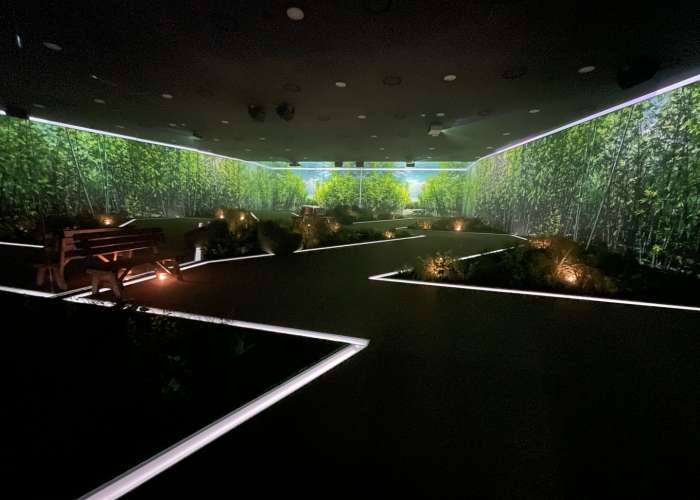
Metaverse Experience Center
Registered as Gangwon Province’s 27th museum, the Coffee Museum offers a rich exhibition of coffee artifacts from around the world, allowing visitors to explore the history and culture of coffee globally.
Introduction
Gangneung Metaverse Experience Center is a space where you can explore metaverse technology and winter sports, filled with advanced interior design and exciting attractions—a dreamlike venue.Located next to the beautiful Gyeongpo Lake, the Gangneung Metaverse Experience Center offers a new dimension where virtual and real worlds seamlessly merge.Explore a digital world composed of diverse content and VR technology, and experience firsthand the vision of future technology.A unique experience awaits you, blending Gangneung’s natural beauty with cutting-edge technology.A place where imagination becomes reality—welcome to the Gangneung Metaverse Experience Center.We invite you to a dream space where you can freely unfold your imagination.
Tourist guide
Nearby attractions include Arte Museum Gangneung, Gyeongpo Lake, Gyeongpo Beach, Chodang Tofu Village, Gangmun Beach, Heo Gyun and Heo Nanseolheon Memorial Park, and popular spots in Chodang-dong.
Tourist Tips
Advance reservations are recommended for a more convenient visit, though walk-in admissions are also accepted.Located adjacent to Gyeongpo Lake and Arte Museum, you can easily enjoy nearby attractions, restaurants, and beaches in the Gyeongpo, Chodang, and Gangmun areas on foot.
#체험#메타버스#체험관#전시관#관람#가족여행#어린이#체험#메타버스#체험관#전시관#관람#가족여행#어린이
-
-
Downtown
Wolhwa Street
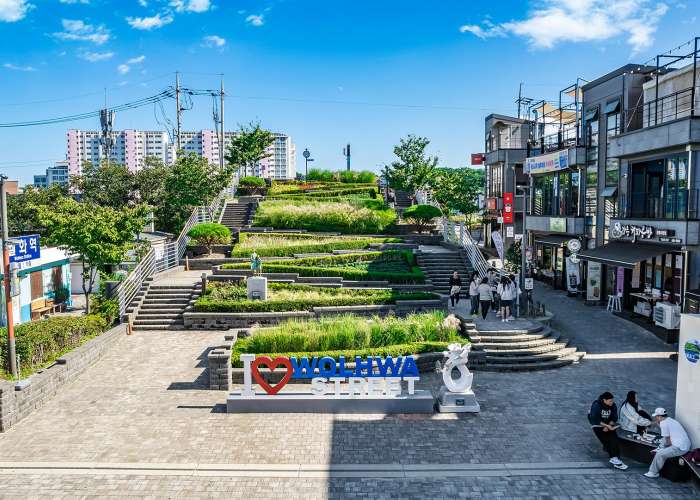
Wolhwa Street is an urban park created along a former railway line in downtown Gangneung.
Introduction
Wolhwa Street is an urban park created along a former railway line in downtown Gangneung. The name “Wolhwa” comes from the poignant local legend of Muwollang and Lady Yeonhwa, a love story that inspired Korea’s famous classic “Chunhyangjeon.” With a rich narrative and inviting atmosphere, this charming street is a place everyone wants to walk, filled with delicious food, performances, and exhibitions.
Tourist guide
Wolhwa Street stretches 2.6 kilometers from Gangneung Station to Buhung Village, transformed into a themed linear park. At its entrance is “Mal Nanumteo Park,” followed by “Imdang Square,” also known as the Folk Market. Further along, the Historical and Cultural Plaza sits beside Homeplus, and the area near Jungang and Seongnam Markets is known as the Living Culture Plaza. Each section offers a unique experience that reflects the daily life, history, and traditions of Gangneung.
Tourist Tips
The name "Wolhwa" originates from a local Gangneung folktale—the heartbreaking love story of Muwollang, a descendant of King Taejong Muyeol of Silla, and Lady Yeonhwa. According to the tale, a pavilion once stood on a rock cliff near Yeonhwa Peak along the Namdaecheon River. It was named Wolhwajeong (Moon-Flower Pavilion), combining characters from their names: “Wol” (moon) from Muwollang and “Hwa” (flower) from Lady Yeonhwa.Although the original pavilion was swept away by a great flood in 1936, a marker stands on the original site, and a reconstructed version can be visited today.As you walk along the 2.6km Wolhwa Street, you'll encounter themed areas such as parks, plazas, and cultural spaces—perfect for exploring Gangneung’s past and present while enjoying scenic walks, tasty bites, and local arts.
#폐철도길#음식#무월랑#전시#거리공원#연화부인
-
-
Daegwallyeong
Coffee Museum
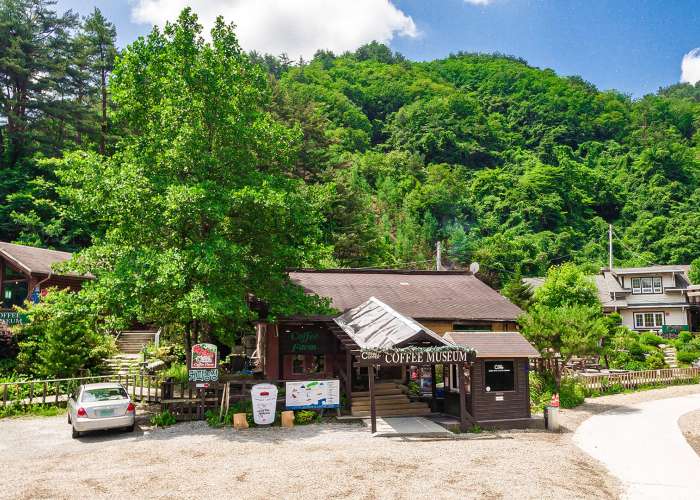
Registered as Gangwon Province’s 27th museum, the Coffee Museum offers a rich exhibition of coffee artifacts from around the world, allowing visitors to explore the history and culture of coffee globally.
Introduction
Registered as Gangwon Province’s 27th museum, the Coffee Museum offers a rich exhibition of coffee artifacts from around the world, allowing visitors to explore the history and culture of coffee globally. It serves as a community space where coffee enthusiasts of all ages can learn about and engage with coffee. Visitors can directly observe and experience the entire process—from coffee cultivation to artifact displays.
Tourist guide
The museum is divided into five main sections: the General Exhibition Hall, Special Exhibition Hall, Coffee Experience Hall, Coffee Education Hall, and Museum Café.Hall 1: Displays artifacts showcasing the history and culture of coffee.Hall 2: Features coffee roasters and grinders.Hall 3: Exhibits coffee makers and various brewing tools used in coffee extraction.Hall 4: Houses a greenhouse with various coffee plants.Hall 5 (Coffee Experience Hall): Offers opportunities to smell and taste different types of coffee.The Museum Café serves specialty coffee along with a variety of side menus.
Tourist Tips
Visitors are recommended to follow the museum map for an efficient tour. Admission includes a complimentary brewed or Dutch coffee. Various hands-on experiences such as roasting, hand drip brewing, and seedling planting are available. Group visits of 20 or more require prior reservation for guided tours or programs. The adjacent Coffee Farm, Korea’s first commercial coffee farm, offers insight into coffee cultivation and features the oldest coffee tree in the country.
#커피#유물#박물관#문화#커피나무#커피체험관#카페
-
-
Downtown
Gangneung Olympic Museum
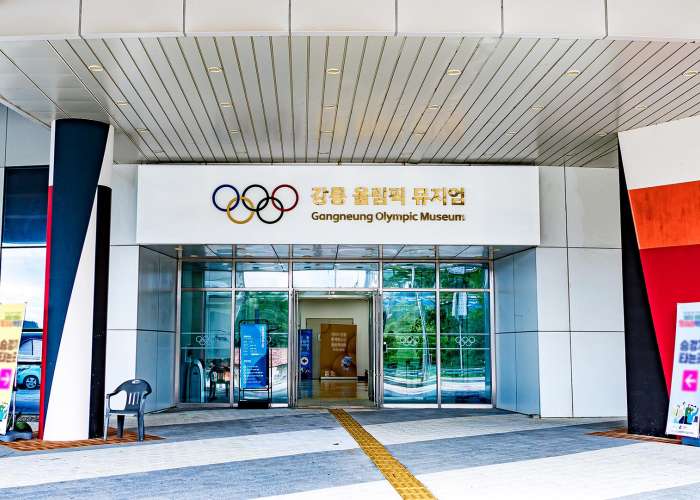
The Gangneung Olympic Museum, a legacy of the 2018 Winter Olympics, serves to educate visitors and citizens about the Olympic spirit.
Introduction
The Gangneung Olympic Museum, a legacy of the 2018 Winter Olympics, serves to educate visitors and citizens about the Olympic spirit. It features various interactive facilities and exhibits Olympic memorabilia, providing a comprehensive insight into the history of the Olympics.
Tourist guide
The museum displays Olympic medals, torch relays, posters from past Winter Olympics, commemorative badges, and more, allowing visitors to relive the glory of the PyeongChang Winter Olympics and the legacy of the Games. Beyond being a simple exhibition space, it operates as a unique educational and experiential facility focused on learning and understanding the Olympic spirit.
#체험시설#올림픽#기념물#동계올림픽#올림픽메달#평창동계올림픽#기념시설
-
-
Downtown
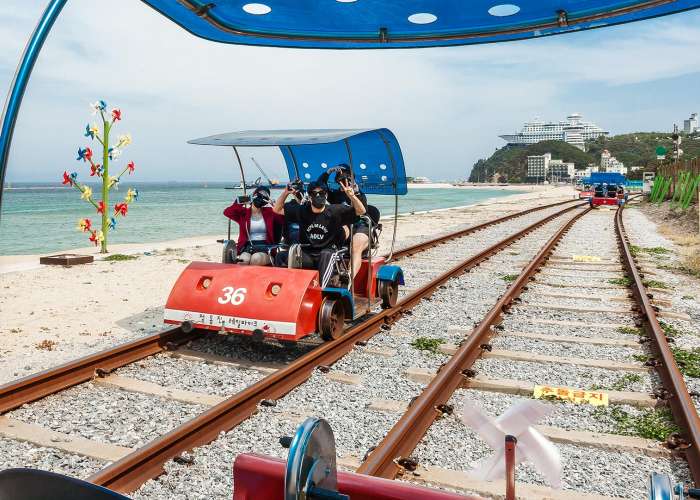
Jeongdongjin Rail Bike
Jeongdongjin Rail Bike is one of the highlights of travel in Gangwon Special Self-Governing Province and attracts many tourists.
Introduction
Jeongdongjin Rail Bike is one of the highlights of travel in Gangwon Special Self-Governing Province and attracts many tourists. Starting from Jeongdongjin Station, the rail bike route offers refreshing sea breezes and scenic ocean views, creating memorable experiences for couples and families alike.
Tourist guide
Access to the Jeongdongjin Rail Bike requires purchasing a ticket. Discounts are available for group tourists, Gangneung residents, and soldiers from the 23rd Division, but discounted tickets must be bought at the onsite ticket booth. The rail bikes come in two types: two-seater and four-seater. Additionally, package deals are offered that combine rail bike rides with visits to nearby museums and attractions in Gangneung, providing a cost-effective way to enjoy multiple experiences.
Travel Tips
The rail bikes are electric-assisted, making them easy to ride for seniors and those with limited mobility. Riders who want to go faster should sit in the rear seat, as pedaling speed increases velocity. The two-seater model is ideal for couples or close friends, featuring pedal operation by both riders using their feet. The four-seater is suited for families or groups, with front-seat riders pedaling by hand and rear-seat riders pedaling by foot.
#정동진역#레일바이크#해변#전동운행#추억#바다#레저스포츠
-
-
Gyeongpo Area
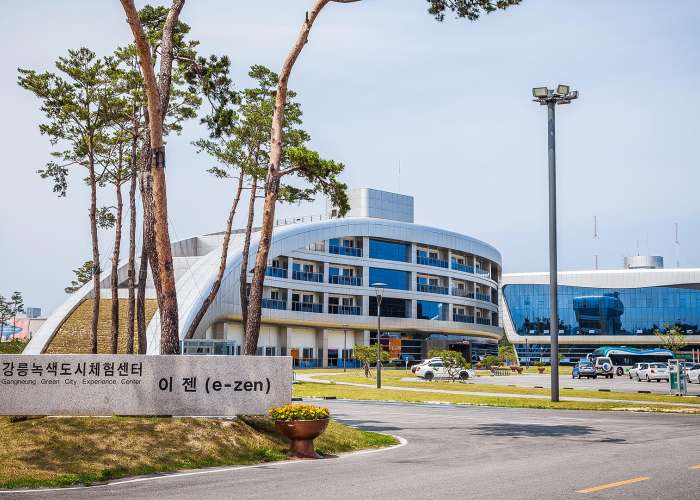
Gangneung Green City Experience Center
A variety of hands-on experience programs available
Introduction
Operated using renewable energy, the Gangneung Green City Experience Center is the nation’s first eco-friendly facility where visitors can explore a green city. From the grassy lawn at the entrance to the streetlights, eco-friendly technologies have been applied throughout the entire site. Visitors can directly see and experience energy generated from nature, offering an opportunity to reflect on the importance of the natural environment.
Tourist Guide
The Green City Experience Center consists of an integrated convention center and an experiential training center. It hosts a variety of educational and exhibition programs, including an experiential exhibition hall with frequently changing themes and hands-on environmental education classes. At the experiential training center, which features a lake garden and accommodations, rooms are provided at a set fee exclusively for participants in the programs. The center also operates various experiential programs designed to spark interest in environmental education, such as the Green System Tour, Eco Tour, Green Academy, and Green Weekend Experience. The Eco Tour is an activity where visitors ride an electric bus called “Chorok-i,” powered by an electric motor instead of fossil fuels, to visit nearby green city project sites, tourist attractions, and cultural heritage locations.
Travel Tips
The Green City Experience Center is composed of an integrated convention center and an experiential training center. The convention center is surrounded by walls fitted with solar power panels, a form of renewable energy. The energy generated here is used to operate the building. As a self-sufficient eco-friendly energy building, its most distinctive feature is that visitors can directly observe and experience energy obtained from nature. Children can also enjoy and learn about the environment in a fun and engaging way. With advance reservations, visitors can enjoy a tour riding an eco-friendly electric bus to and from an art museum. Please note that the center is closed on Mondays. Through the Green System experience tour in Gangneung, visitors can learn about the city’s history, culture, and environment. A wide range of hands-on programs are available, making it enjoyable for both adults and children. Nearby, the Heo Gyun and Heo Nanseolheon Memorial Park is located, and a visit is highly recommended.
-
-
Jumunjin Area
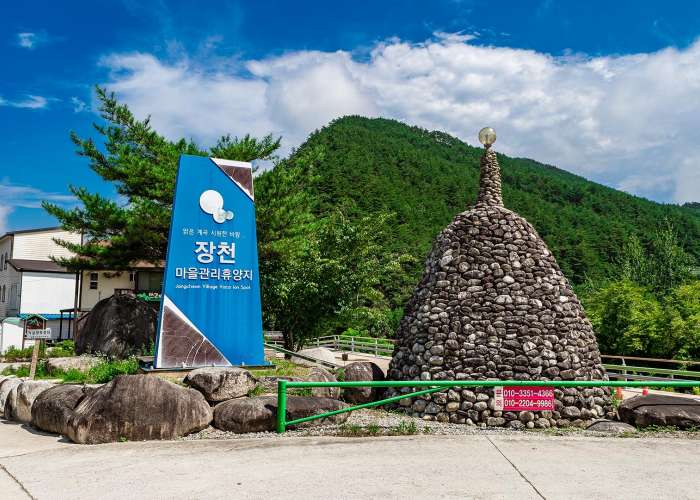
Sogeumgang Jangcheon Village
A village offering year-round hands-on experience programs
Introduction
Sogeumgang Jangcheon Village is a beautiful village located near Sogeumgang, a designated scenic site. Surrounded by pristine mountains and scenic valleys, it offers a variety of natural attractions. Nearby beaches such as Yeongok, Jumunjin, and Gyeongpo are within 20 minutes, and hiking routes to Odaesan Mountain (No-inbong and Dongdaesa Temple) are about 10 minutes away.Jangcheon Village in Samsan-ri was designated as a managed recreational area in 1989. In 2008, it was recognized as an excellent rural village and introduced traditional milling experience programs, allowing visitors to experience traditional grain-processing tools.
Tour Guide
Located at the entrance of Sogeumgang, the Samsan Jangcheon recreation area features clear Yeongokcheon Stream and dense pine forests, offering a quiet and cozy atmosphere. With increasing visitors using the Jingogae route, nearby attractions such as Sogeumgang, Yeongok Beach, and Songcheon mineral spring have contributed to the growing number of tourists.The village offers camping grounds, pensions, cultural programs, and group accommodations, operating year-round. Facilities include shower rooms, a small theater, and restrooms.
Travel Tips
Jangcheon Village has been designated as a rural theme village since 2008 and has operated a sheep ranch since 2011, allowing visitors to interact with sheep. Visitors can also taste locally grown agricultural products. The camping site is known for its cleanliness, leading to many repeat visitors.Accommodation is available even without camping equipment, including school-style lodging, community lodging, and farmhouse stays. The village also offers 1-night, 2-day experiential programs, allowing visitors to enjoy immersive stays.Visitors can make pizza, chocolate, and mozzarella cheese, which is especially popular among children. The sheep ranch provides a joyful experience for all ages.Local specialties such as potatoes, corn, black goat products, and wild mushrooms are available. Nearby attractions include Odaesan Mountain, Chwiseonam Rock, Hyundeoksa Temple, and several camping sites.With beaches within 20 minutes and hiking trails within 10 minutes, the village is a convenient and attractive destination that visitors often return to.
#소금강#명산#계곡#휴양지#체험#송림#캠핑장#펜션
-
-
Gyeongpo Area
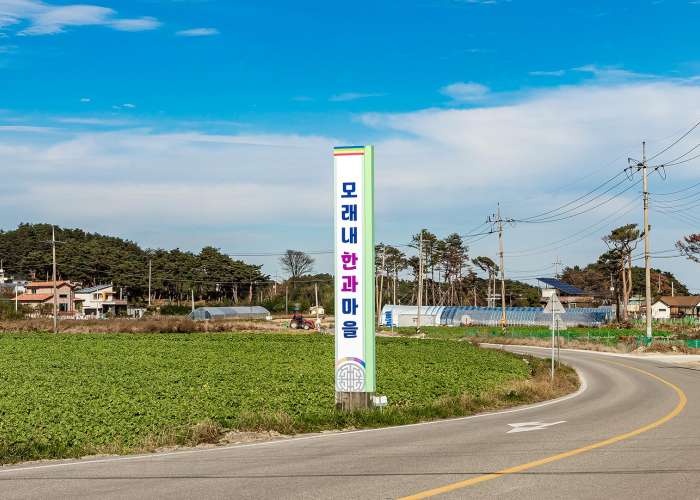
Moraenae Hangwa Village
A hands-on village where you can experience making traditional Korean hangwa
Introduction
When people think of “hangwa” (traditional Korean sweets), many recall Gangneung. In times when sweets were rare, our ancestors devoted extraordinary care to making even a single piece, spending days and nights boiling malt syrup, carefully selecting high-quality glutinous rice and fragrant sesame seeds, and crafting hangwa with utmost dedication.Gangjeong, known for its crispy texture, is made by fermenting and drying glutinous rice flour, mixing it with alcohol and boiling water to form a dough, then cutting it into appropriate lengths and drying it. It is then deep-fried in oil and coated with honey or grain syrup, and finally covered with sesame seeds, soybean powder, pine nut powder, or pine pollen powder to enhance both taste and appearance.Gwajul is a traditional confection made from a glutinous rice base and decorated with puffed rice coating. As consumer preferences shifted toward healthier foods, Moraenae Hangwa Village was designated as Traditional Food No. 2 by the Ministry of Agriculture in 1995. Since then, it has produced five types of products including sesame gangjeong, exporting them overseas—including to the United States—thus contributing to national prestige and regional economic development. The village has received the Korean Government Industrial Medal and gained nationwide recognition as a traditional hangwa village.Sacheon-myeon in Gangneung was originally called “Moraenae,” meaning “sandy stream,” due to the sandy river flowing through the area. Once a poor rural village just 30 years ago, it has transformed by preserving 130 years of traditional hangwa-making techniques. Through participation in the “One Village, One Specialty Product” initiative, the entire village now produces hangwa using traditional methods, becoming the renowned Moraenae Hangwa Village.
Tour Guide
Gangneung Moraenae Hangwa Village was designated as a Traditional Food Preservation Village in 1989, an Information Model Village in 2001, and an Outstanding Village in the New Rural Community Movement. It continues to actively produce hangwa today.While Korean food culture is increasingly westernized in appearance and taste, Moraenae Hangwa maintains its authenticity by using clean, self-produced glutinous rice for all ingredients except frying oil. Without automated or mass production facilities, the village preserves a traditional cottage industry approach, producing only limited quantities. This is the very strength that upholds the tradition and excellence of hangwa. It is truly a traditional Korean confection imbued with the spirit of craftsmanship.
Travel Tips
Gangwon State is a region known for upland farming, where staple foods traditionally included corn rice, potato rice, potato dumpling soup, and buckwheat noodles made from field crops such as corn, potatoes, and buckwheat. Hangwa was also commonly made from these crops.Moraenae Hangwa Village was originally a farming community, but as hangwa production increased, it became the main industry while farming became secondary. The village uses locally grown agricultural products as primary ingredients and established its own grain syrup factory, ensuring that only pure grain syrup is used. This results in its exceptional taste.There is even a saying that once you taste hangwa from Moraenae Village in Gangneung, you cannot enjoy hangwa from elsewhere. This is because the grain syrup used differs from common malt syrup in both taste and production process; using regular malt syrup does not produce the authentic flavor of hangwa.Gangneung is especially famous for gwajul, thanks to the dedicated efforts of local residents. By building a grain syrup factory and striving for better taste, they have produced superior-quality gwajul. They have also improved distribution systems, transitioning from offline sales to both online and offline channels, as well as exports overseas, making Gangneung hangwa even more widely known.Through these efforts, Moraenae Hangwa has become a distinguished regional specialty with unique characteristics, attracting visitors from around the world. The residents of Moraenae Village cherish their ancestral heritage and continuously strive to further develop their traditions, making the village all the more charming and admirable.The area surrounding Moraenae Village in Gangneung also offers plenty of attractions, including beaches, recreational forests, and literary museums. The nearest beach, Sacheon Beach, is known for its high-quality sand and clean water, attracting visitors year-round.Although less widely known than Sacheon Beach, Hapyung Beach is popular among family travelers. It was named after Heo Bong, the second son of Heo Yeop, who once lived there. The beach features a stretch of white sand connected to Dwitbul Beach and a wide forest of pine trees behind it, offering a quiet and clean environment.Visitors who come to Gangneung to enjoy the sea will likely think of hangwa as they walk along the white sandy shores. While hangwa makes an excellent gift or snack, we recommend visiting Moraenae Hangwa Village to experience the delight of tasting freshly made hangwa on-site.
-
-
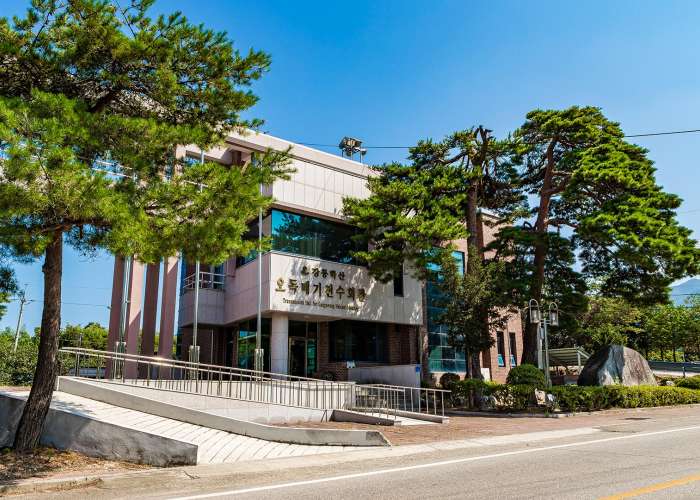
Downtown
Hakmaeul Village
Experience activities in a village of education that has produced many talented individuals
Introduction
Haksan has long been known as a pleasant place to live and a village of education that has produced many talented individuals. Hakmaeul Village is located in Gujeong-myeon, Gangneung-si, Gangwon State. It is a rural village situated about 6 km south of Gangneung City Hall and 1 km from the Gujeong-myeon office in Yeochan-ri.It was incorporated into Gujeong-myeon of Gangneung County in the 33rd year of King Gojong’s reign, and after the integration of city and county administrations in 1995, it was divided into three administrative villages (1-ri, 2-ri, and 3-ri) in 1996.The village is also known as the birthplace of the eminent monk Beomil, who later became the guardian deity (Seonghwang) of Daegwallyeong in the Yeongdong region. It is home to numerous cultural heritage sites such as the Gulsa Temple Site Stupa, the Flagpole Supports at Gulsa Temple Site, and the Gangneung Haksan Odokttegi folk song.With its natural geography blessed by mountains and water, Hakmaeul Village is a beautiful tourist destination that offers both scenic charm and convenient transportation.
Tourist Guide
Hakmaeul Village is home to many cultural assets, including Seokcheon Well, Hakbawi Rock, the Gulsa Temple Site, flagpole supports, stupas, and a seated stone Buddha statue. It also preserves the valuable cultural heritage known as Haksan Odokttegi.Odokttegi is a traditional farming song sung to relieve fatigue and increase efficiency during agricultural work. As several skilled practitioners of this folk song reside in the village, visitors can enjoy their beautiful performances.Various hands-on experiences are also available. Visitors can participate in natural dyeing experiences at Yeseowon, family camping programs, and plum extract-making experiences at Seollaegol Plum Farm with prior reservations.The village also sells local specialties such as pure perilla seeds, glutinous corn rice, and Seollaegol plums, making them excellent souvenirs.
Travel Tips
At the Hak Information Village Center, visitors can join guided cultural heritage tours, harvest sweet and sour fruits, and dig for potatoes and sweet potatoes.At the healing camp Yeseowon, which operates a café, pension, and experience farm, visitors can enjoy homemade fermented enzyme tea and lotus leaves, as well as participate in tea ceremonies, natural dyeing, and wildflower experiences. Making reservations in advance is recommended for convenient use.Visitors can also experience making traditional confectionery (jeonggwa) by hand. Coffee lovers may enjoy visiting a café that also roasts its own coffee beans, as well as a fair-trade café.Since the flagpole supports are located not far from the city center and transportation is convenient, and Gangneung is famous for its Coffee Street, visitors can enjoy a warm cup of coffee while viewing the sea after exploring Hakmaeul Village.It is also recommended to visit the Chodang Sundubu Village to taste the unique soft tofu dish that can only be found in Gangneung.For those traveling with children, visiting a handmade hamburger restaurant at Gangmun Beach is also a great option. Gangmun Beach is especially well known for its photo zones, making it a perfect place to take beautiful pictures.One useful tip is to plan your sightseeing route along the coastline, either moving up or down, to enjoy more attractions in an organized way. On the way back home, stopping by Gangneung Jungang Market to purchase affordable and delicious local foods such as dakgangjeong (sweet crispy chicken), ice cream hotteok, and grilled short rib patties is highly recommended.
#학산#인재#교육#학바위#굴산사지#문화재#문화재탐방
-
-
Daegwallyeong
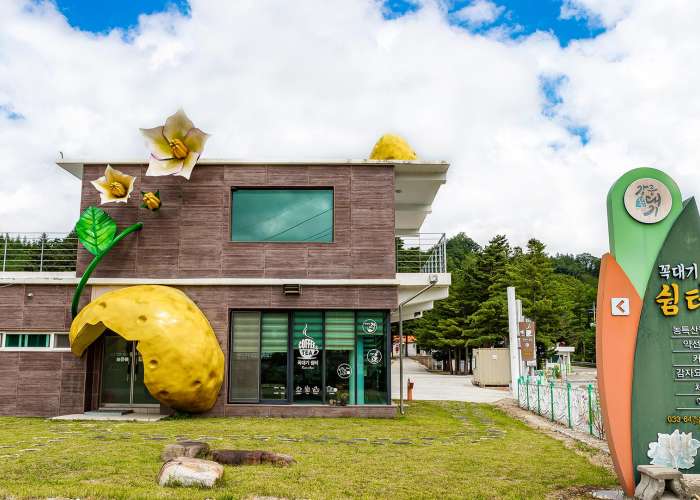
Daegiri Village
A village where you can enjoy a variety of experiences in nature
Introduction
Daegiri Village in Gangneung is a lush highland village surrounded by green forests. It is far more than a typical mountain village—its vivid greenery is truly dazzling.Located at an elevation of over 700 meters along the Baekdudaegan mountain range that divides Gangwon State into east and west, the village is home to a rich ecosystem of alpine plants and seasonal wildflowers. Clear streams flow through deep valleys, preserving the grandeur and pristine nature of ancient forests, making it one of the finest forested highland villages in Korea.In the past, Daegiri was known as one of the most remote mountain villages. However, with the expansion of road networks including Local Routes 415 and 410 and National Route 35, access to Gangneung, Jeongseon, Donghae, Taebaek, and Pyeongchang has greatly improved. Today, it is easily accessible and visited year-round.
Tourist Guide
Daegiri is a typical mountain village where residents rely on agriculture, particularly highland vegetables and seed potato production, supplying about 25% of Korea’s seed potatoes. The villagers also collect forest products such as wild greens and mushrooms.To the south of the village are Nocheusan and Sadalsan Mountains, where the scholars Seol Chong and Yulgok Yi I once studied. The village also features several former school sites, including Daegi Elementary School and its branches, which have been repurposed. The former Daegi Elementary School is now used as a meeting hall and camping accommodation for visitors.Water flowing from different valleys converges and eventually joins Songcheon Stream, flowing toward Gujeol-ri in Jeongseon.
Travel Tips
Daegiri is known for its warm-hearted residents who reflect the purity of the surrounding nature. Their spirit has helped create a unique mountain village culture.Visitors can enjoy the Wangsan Valley Music Concert and observe various development projects that attract officials from across the country for study tours.There are pensions and mountain experience schools offering various rural experiences, as well as opportunities for hiking in the surrounding mountains. Nocheusan Mountain, located in Daegi 1-ri, rises to 1,322 meters. Its name is said to combine characters from ancient Chinese states. Midway up the mountain stands Iseongdae Pavilion, a two-story wooden structure honoring Seol Chong and Yulgok Yi I, where visitors can feel inspired toward learning.Heading toward Gujeol-ri in Daegi 3-ri, visitors will find the Nocheusan Forest Bathing Area. About 400 meters down the valley lies the Balwangsan Trail, where pristine waterfalls and diverse wildflowers such as Korean mint and monkshood can be seen. Hiking times vary from 1 to 4 hours depending on the route.The area features dense forests of pine, oak, ash, and birch trees, along with a wide variety of wildflowers. With its forest bathing facilities and natural interpretation boards, it is an ideal destination for relaxation and healing.Nearby is “Anbandegi,” known as the highest village under the sky, where vast highland fields stretch along mountain slopes, creating a stunning landscape shaped by both nature and human effort.Daegiri also has lily cultivation areas, offering visitors the chance to enjoy the delicate fragrance of lilies. Visiting Daegiri Village feels like receiving a complete gift set of nature and experiences.
#고산식물#고원지대#문화#산골체험학교#체험#힐링#산골
-
-
Jumunjin Area
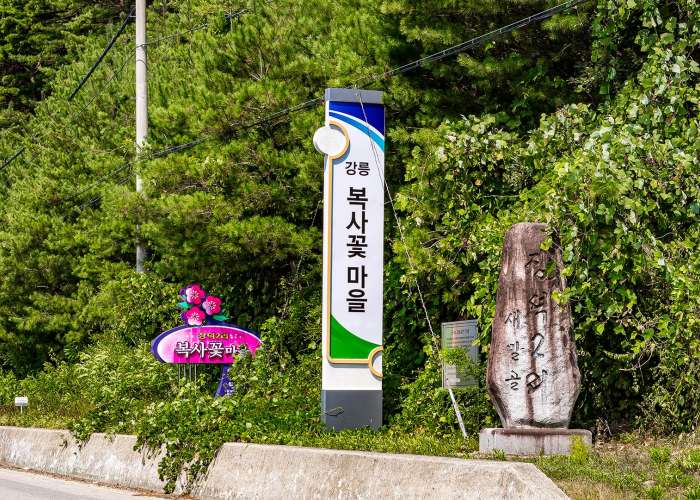
Boksakkot (Peach Blossom) Village
Jangdeok-ri Peach Blossom Village where pink peach blossoms announce the arrival of spring
Introduction
Peach Blossom Village is a rural experience village that combines natural resources such as mountains, the sea, and the Sinricheon Stream, along with well-established infrastructure including communal experience facilities, numerous accommodations, and traditional farming tool experience centers. It is also designated as a farm stay village and a green rural experience village.The village is widely known for its Peach Blossom Festival in spring and the Scarecrow Festival in autumn. With the expansion of the five-day workweek system, travel culture has evolved from simple sightseeing into a new culture that combines experiences and leisure. Rural tourism, where tradition and nature harmoniously coexist, represents a new cultural trend desired by both visitors and local communities.
Tourist Guide
Peach Blossom Village hosts festivals in both spring and autumn. In spring, the Peach Blossom Festival takes place in April under beautiful blooming peach blossoms. In autumn, during the golden harvest season, the Scarecrow Festival is held to honor the hard work of farmers throughout the year.The Peach Blossom Festival features various performances and hands-on programs that visitors can directly participate in. As the largest fruit-producing village in the Yeongdong region, the entire village turns pink when the blossoms bloom in April, and in June, during harvest season, the sweet fragrance of peaches fills the air throughout the village.
Travel Tips
Spring in Peach Blossom Village is entirely pink. The peach blossoms bloom brilliantly, coloring the entire village. Since most residents cultivate peach orchards, peach trees bloom everywhere, creating a breathtaking and unforgettable scene. It is as beautiful and vibrant as the famous Jinhae Cherry Blossom Festival.The Peach Blossom Festival in mid-April attracts couples who love pink scenery as well as families looking for fun and laughter. The festival mainly consists of performances and experiential programs. When visitors participate in treasure hunts in the peach blossom fields, they can feel as if they have become princesses in a land of flowers. During the singing contest, both residents and visitors come together to showcase their talents.There are also photo exhibitions, traditional rice cake pounding, traditional games, and fruit tree seedling giveaways, offering visitors the opportunity to plant a tree in spring. For city dwellers, planting a tree is not always easy, but here they can experience not only planting but also the joy of nurturing and watching it grow over time.No festival is complete without food. At the Peach Blossom Festival, visitors can enjoy bibimbap, banquet noodles, acorn jelly, green onion pancakes, mugwort dumplings, and traditional rice wine prepared by the village women’s association. In particular, the rustic mugwort rice cake resembles Jeju’s “Omegi-tteok” and is a nutritious spring delicacy with a rich aroma that brings the essence of spring to your palate.At the entrance of the village stands the Jangdeok-ri Ginkgo Tree, estimated to be around 800 years old, believed to protect the village. In summer, residents gather under its shade to relax and strengthen community bonds. The tree can also be seen from the road passing through the village.After enjoying the village experience, visitors are encouraged to visit Jumunjin Beach. There, a spacious pine forest allows for camping, and nearby seafood markets offer fresh catches of the day. After indulging in seafood, visitors can head to Samhyeongjebong Peaks, one of Gangneung’s hidden gems. Although the peaks may seem close, hiking them takes at least three hours. The area is also known for the famous Samgyori Makguksu village, where visitors can enjoy authentic buckwheat noodles after their hike.Starting from Peach Blossom Village, visitors can enjoy a complete travel experience combining the sea, mountains, and hands-on activities all in one trip.
#복사꽃#숙박시설#팜스테이마을#축제#체험#전통