-
-
Gyeongpo Area
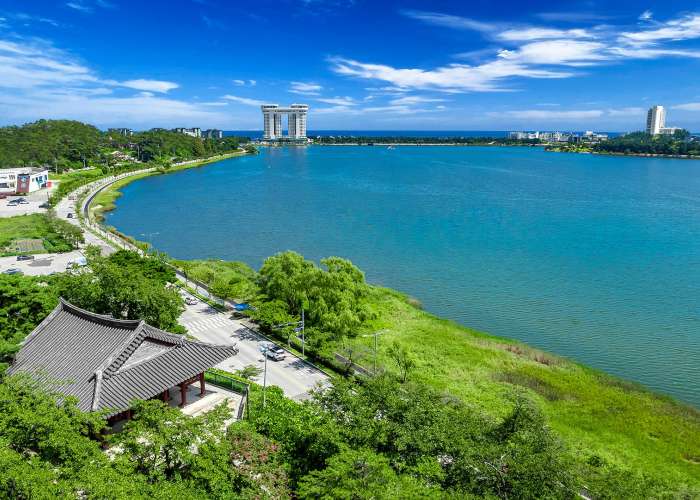
Gyeongpodae Pavilion
On the side is an arm shaped the gambrel roof house
Introduction
'Gyeongpodae Pavilion' represents one of Gangneung's scenic spots where it is located at Gyeongpo-ro, Gangneung-si, Gangwon-do, and it has been designated as the sixth Gangwon-do cultural asset. 'Gyeongpodae Pavilion' shows the Goryeo Dynasty's culture that mainly consists of 6 spaces in front, 5 spaces on the side, and 32 pillars.
Tourist guide
Near 'Gyeongpodae Pavilion' is the 'Gyeongpo Beach' and 'Gyeongpoho Lake', during new years at 'Gyeongpo Beach' there are many tourists who visit to see the sunrise, so it is highly recommended to reserve accommodations beforehand. Also, 'Gyeongpoho Lake' is close to 'Chodang-dong' where the 'Chodang Sundubu' is famous which is one of delicacy's of this area and is recommended for tourists to visit.
Tourist Tips
It is considered that King Chungsuk of Goryeo in year 13 founded 'Bakseuk' which is known as 'Banghaejeong' in the Anreumsa Temple of Gangwon-do and 'Inwolsa Temple' that was located in the back of the mountains, yet later the location has been said to have been moved but there is still no detailed evidence. At the 'Gyeongpodae Pavilion' it is known that Yulgok Yi I at age 10 built the 'Gyeongpo Daebu' which are letters of nouns such as the 'uhsaeji' of 'sukjong' and 'sangryangmun' of johamang. Here you can see 'Gyeongpo 8 gyeong' and 'Gyeongpo wolsam' that has been handed down to the great spectacle of a strong man.
-
-
Downtown
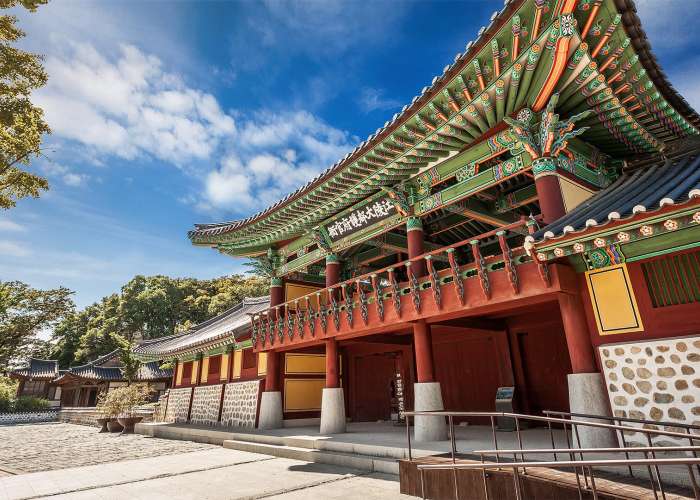
Gangneung Daedohobu
One of the oldest front gates of Gaeksa with great value
Introduction
It is a building site where government officials used to stay temporarily when visiting Gangneung during the Goryeo and Joseon Dynasty. According to the records from the Joseon dynasty, it was built in the 19th year of King Taejo of the Goryeo Period (936) and had 83 rooms inside. However, only the front gate of Gaeksa (national treasure no. 51) remains, which is one of the oldest building from the Goryo period. It also houses the tablet written by King Gongmin.
Tourist guide
According to the excavation investigation on the site for the construction of Gangneung City Hall building, it turned out that the site is a reservoir of data for research on building site of the government offices during the Goryeo and Joseon Dynasty. Also, Gangneung's local history book, Imyeongji deems it as a crucial area with historical significance that tells us history and culture of old Gangneungbu.
Tourist Tips
It was designated as the national historic site no. 388 on 11th July 1994, under the name of Site of Imyeonggwan Guesthouse, and then changed into Gangneung daedohobu Government Office on 27th November 2014. To the south, there is Gangneung Imyeonggwan Sammun (National treasure no. 51). Currently, the restoring construction of Jeondaecheong and Jungdaecheong is underway for excavation and autoradiographic investigation.
-
-
Downtown
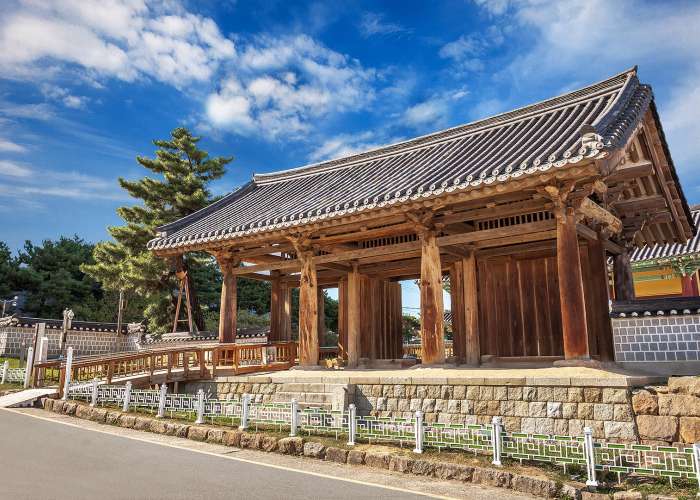
Imyeonggwan Sammun
National Treasure No. 51
Introduction
Imyeonggwan Sammun is one of the gates located in Yonggang-dong, Gangneung-si, Gangwon-do Province. It is a pride and a popular tourist attraction of Gangneung that was designated as National Treasure No. 51 in 1962. Its former name is Gangneung Gaeksamun Gate, and it began to be called Imyeonggwan Sammun in April 2010. Although the year of its construction is not known exactly, it is speculated to have been built in the early Joseon dynasty, based on the architectural style. It may be small in size, but it is considered a beautiful part of our heritage passed on by our ancestors that demonstrates the beauty and excellent structural characteristics of wooden buildings of Korea.
Tourist guide
The term, “gaeksa,” refers to a guesthouse where very important guests or visiting officials from the central government stayed in the past. Imyeonggwan Sammun is the name of the gate to such facility. The guesthouse in Gangneung where Imyeonggwan Sammun is found is a wooden building erected during the reign of King Taejo of Goryeo, and in recognition of its beautiful and elaborate architectural elements that are characteristic of the architectural style in the Goryeo dynasty, it was designated as National Treasure No. 51. The signboard seen today was actually handwritten by King Gongmin during his trip to Naksansa Temple. The gate is in jusimpo style, and such classical beauty and elaborate structure are not seen commonly in Korea. The entasis of the pillars are especially extreme, and it gives off an antique appearance overall. It is characterized by the less severe decorative characteristics. It is speculated that it was built earlier than the main hall (Daeungjeon) of Sudeoksa Temple. Only the gate remains today, and it is the oldest extant wooden building in Korea, excluding Buddhist temples and halls.
Tourist Tips
Imyeonggwan Sammun located in Imyeonggwan Guesthouse located in Gangneung, Gangwon-do Province was where important guests visiting Gangneung were wined and dined. Located close to the city center, it is a great place to visit for tourists coming to Gangneung. It is next to Gangneung Daedohobu (government office), which we also suggest that you visit. It is a building site where central government officials stayed during their visit to Gangneung from the Goryeo dynasty until the Joseon dynasty, and it used to be the administrative center of Gangneung. Unfortunately, however, most of it was damaged, except for Imyeonggwan Sammun and Chilsadang. Only the site remains today, but it is worth exploring as it retains the traces of the prosperous and brilliant history of Gangneung.
-
-
Downtown
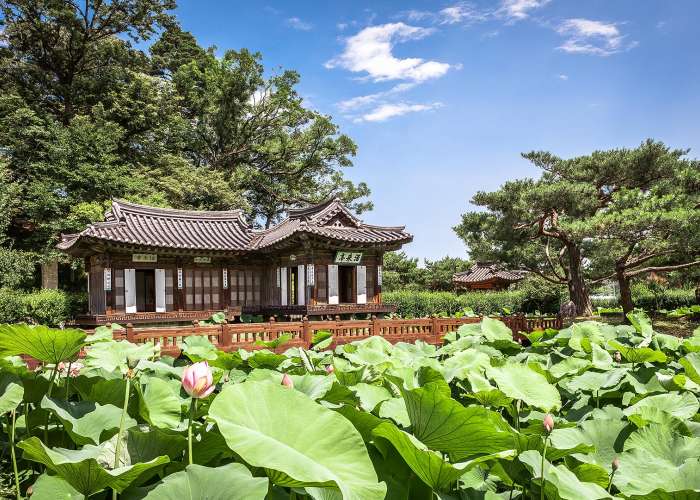
Seongyojang House
Important Folklore Material No. 5
Introduction
"Seongyojang House" is located at Unjeong-dong, Gangneung-si, Gangwon-do. It is a house where Lee Nae-beon, known as a noble family of Gangneung, lived first and his descendants also resided from generation to generation and designated as Important Folklore Material No. 5 now. "Seongyojang House" consists of "Yeolhwadang," "Main Building," "Dongbyeoldang," "Hwallaejeong," etc.
Tourist guide
"Seongyojang House" is a typical 99-part house of noble family. As a private upper-class house, it has been designated as national cultural property, continuing its reputation from generation to generation. This traditional house has been preserved well for about 300 years. This serves as a famous tourist attraction showing the house culture of the Joseon Dynasty in harmony with surrounding nature.
Tourist Tips
"Seongyojang House" serves as an important material not only for studying a building but also the residential life and culture of the Late Joseon Dynasty. In particular, its detached house "Yeolhwadang" is a tower-style building constructed on the three-storied rectangular stones, holding thousands of books and pictures such as "Yongbieocheonga Song" and "Goryeosa Record" and commanding a scenic landscape. "Hwallaejeong Pavilion" was built over an artificial pond inside "Seongyojang House" garden after "Yeolhwadang." Its entire walls consist of sliding doors with a lattice pattern. There is a tearoom for receiving guests, at a corridor connecting rooms and floors.
-
-
Downtown
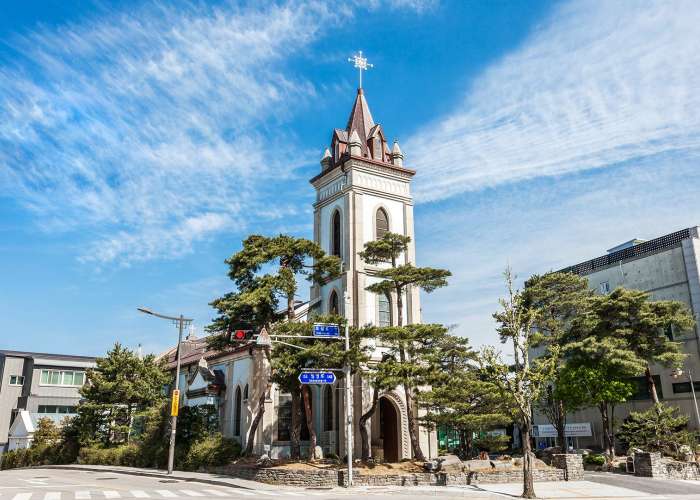
Imdang-dong Catholic Church
An exotic Catholic church designated as a Modern Cultural Heritage site
Introduction
Imdang-dong Catholic Church is located on Imyeong-ro in Gangneung-si, Gangwon State. It has been designated as a Modern Cultural Heritage of Korea and is regarded as the center of Catholicism in the Yeongdong region, as many churches—including Okcheon-dong Church and Noam-dong Church—branched out from here. Although the windows, roof, and floors have undergone several repairs, the exterior—including the central bell tower at the front—retains its original appearance from the time of construction. Its unique decorative elements further enhance its historical value. It was designated as a national heritage site on February 19, 2010.
Tour Guide
While strolling through downtown Gangneung under the warm sunlight, you may suddenly find yourself stopping in front of this charming church. Walking around to the back, you will be captivated by an exotic scenery that feels as if you have stepped into another country. The rounded ceiling and the colorful stained-glass windows that allow bright sunlight to stream in illuminate the ivory-toned interior beautifully. Here, you can experience both the warmth of this exotic church and the solemn atmosphere of a modern cultural heritage site.
Travel Tips
Imdang-dong Catholic Church is a place where you can appreciate both exotic scenery and learn about Korea’s modern cultural heritage. To enjoy a more relaxed visit inside, it is recommended to avoid Mass hours. Across from the church is the Gangneung Daedohobu Government Office, making it a great idea to visit both sites together. Additionally, in March, plum blossoms bloom in full in the church garden, offering visitors a chance to immerse themselves in their fragrance and beauty if the timing is right.
-
-
Gyeongpo Area
Heo Gyun and Heo Nanseolheon Memorial Park
Gangwon-do cultural property materials No. 59
Introduction
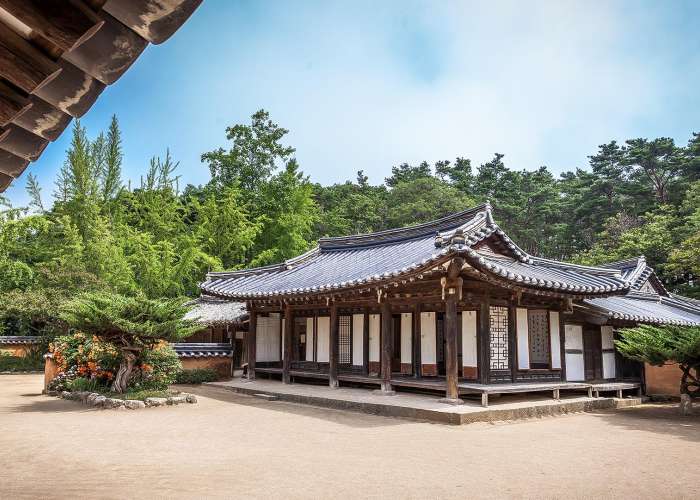
The Heo Gyun and Heo Nanseolheon Memorial Park, located at Chodang-dong, Gangneung-si, is a literature park to commemorate the brother and sister; Heo Gyun, who wrote "Tale of Hong Gil-dong," the first novel written in Korean language in the Joseon Dynasty, and Heo Nanseolheon, who is recognized as one of the best female writers then. It includes facilities including the Heo Gyun and Heo Nanseolheon Memorial Hall, the Traditional Tea Experience Center and a green park.
Tourist guide
This park consists of the Site of Birthplace of Heo Nanseolheon, the Heo Gyun and Heo Nanseolheon Memorial Hall and the Traditional Tea Experience Center. In the Site of Birthplace of Heo Nanseolheon, upon entering through a toll gate, there is a wide men's yard, inside which there is a square-shaped main building. Then, the main building is also divided into a main house and a detached house with a storeroom in between. The Heo Gyun and Heo Nanseolheon Memorial Hall is a single-story wooden building made of Korean roof tiles. Upon entering through a square-shaped passage, there is an information desk, and then a main exhibition room and a sub-exhibition room.
Tourist Tips
The Heo Gyun and Heo Nanseolheon Memorial Park is designed to support the innovative spirits politically or socially during the Joseon Dynasty, enhance the innovative ideas of Heo Gyun, who wrote "Tale of Hong Gil-dong," the first novel written in Korean language, and commemorate his sister Nanseolheon, Heo Cho-hui, who was a famous female poet then. In the park, there are the memorial hall, a status, a poetry monument, etc. including the Site of Birthplace of Heo Nanseolheon. Behind the birthplace site, there is a resting place with fantastic pine tree forests. This is the perfect place for families to come and have a healing time. Because it has less tourists, it may serve as a better resting place than Gyeongpodae Pavilion or other Gangneung tourist attractions. The Heo Gyun and Heo Nanseolheon Memorial Hall holds events like the Gyosan Cultural Festival and the Nanseolheon Cultural Festival in every Spring and Fall. In particular, the Nanseolheon Cultural Festival has gained popularity among many people by holding the Nanseolheon Tea Ceremony under the supervision of the Gangneung Council of Women. As one of the famous places in Gangneung-si, it is the perfect place for paying a visit among many people. It is also recommended to bring a cup of hot tea and walk into the pine tree forest of the Heo Gyun and Heo Nanseolheon Memorial Park.
-
-
Gyeongpo Area
Kim Dong-myeong Literary Museum
A literary museum dedicated to Kim Dong-myeong, a modern and contemporary poet born in Gangneung
Introduction
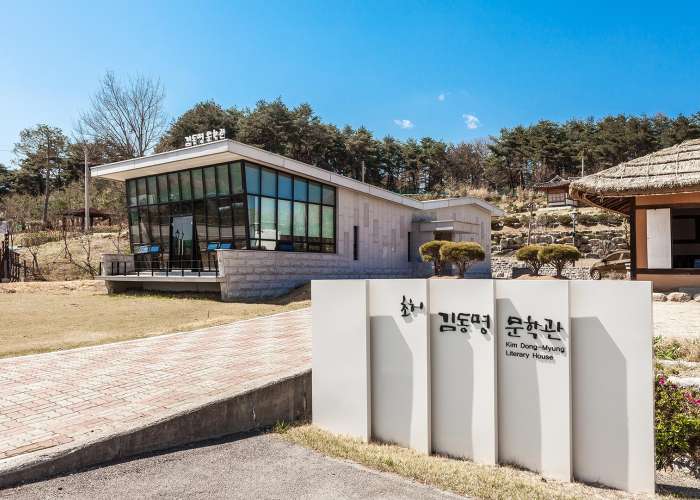
The Kim Dong-myeong Literary Museum, located in Nodong-ri, Sacheon-myeon, Gangneung-si, Gangwon State, was established to honor the poet Kim Dong-myeong. Previously, Gangneung lacked sufficient spaces for literary activities, which limited opportunities for writers. With the opening of this museum, it has become a valuable venue where literary figures can engage in a variety of creative and cultural activities.
Tour Guide
Kim Dong-myeong was a poet who expressed pastoral lyricism and national sorrow through his poetry, opening new horizons in modern literature in Gangneung. To reexamine the life of Choheo Kim Dong-myeong (1900–1968), one of Korea’s most prominent modern and contemporary literary figures born in Gangneung, and to carry on his literary spirit while contributing to the promotion of local arts and culture, the Kim Dong-myeong Literary Museum was opened on July 3, 2013.The site covers an area of 8,656㎡, with a building area of 235.39㎡, consisting of one reconstructed birthplace house and one exhibition hall. The house includes four rooms and one kitchen, while the exhibition hall contains one exhibition room and one seminar room.
Travel Tips
The exhibition room recreates Kim Dong-myeong’s study, centered around the books he owned. On display are his poetry collections, political commentaries, essays, a chronological record of his life, details of his literary activities, and various publications he produced.The seminar room hosts a variety of literary events such as poetry illustration exhibitions, poetry readings, writing contests, monthly meetings or presentations by writers, evenings of art songs, and small-scale cultural programs. The museum is closed every Monday.At the Kim Dong-myeong Literary Museum, regular meetings and literary events organized by various literary groups are held, including writing contests hosted by writers’ associations, book concerts, evenings of art songs, educational programs for poetry illustration, and film screenings held on the last Wednesday of each month.Born as the only son of a poor farmer, Kim Dong-myeong was deeply influenced by his mother. Before moving to Wonsan, when he visited his maternal home in Sagimak-ri (Galmi Peak), his poem won first place at a poetry gathering held at a village school. Despite the excitement throughout the village, his mother offered no praise, likely out of concern that her son might become arrogant.His mother hoped that he would one day become the county governor of Gangneung and return home with her. Although he left his hometown to study modern literature, amid life’s hardships and sorrow, the place he longed for most was his birthplace—Gangneung.At the Kim Dong-myeong Literary Museum, visitors can encounter the poet who, though poor, was never pitiable. After a long silence, Kim Dong-myeong now speaks to us once again.If you visit Sacheon, it is recommended to explore nearby attractions and enjoy local cuisine. Sacheon Port and Sacheon Beach, located nearby, are small but beautiful coastal spots popular among scuba divers. Another reason people visit Sacheon Port is for its famous and delicious dishes such as mulhoe (cold raw fish soup) and seaweed soup. Mulhoe is made with various seafood such as squid, sea squirt, sea cucumber, and sliced raw fish, mixed with vegetables and spicy vinegar chili paste, offering a refreshing sweet and tangy flavor.
-
-
Downtown
Gulsansa Temple Site Flagpole Supports
Flagpole supports from the Unified Silla period made of granite.
Introduction
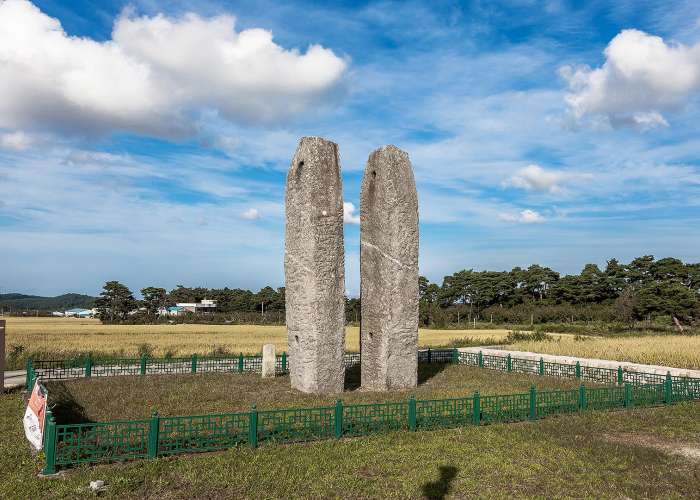
This is the largest flagpole support in Korea, carved from a single massive stone. Currently, the lower part is buried, making it impossible to identify the base structure that once supported the flagpole. The four sides are plain without decoration, and the lower section still bears the rough lines from the initial stone-carving process. The inner and outer faces are vertical, while the top of the pillars curves gracefully into a pointed peak, although the southern tip is slightly damaged.
Tourist Guide
Designated as Treasure No. 86 in 1963, these supports are relics of Gulsansa Temple, founded by National Preceptor Beomil. Standing at 5.4 meters tall, they feature two holes (upper and lower) to secure the flagpole. The massive scale and simple yet powerful carving technique showcase the grand sculptural beauty characteristic of the Unified Silla period.
Tourist Tips
The supports are located on flat ground surrounded by rice paddies near Haksan-ri village. You might wonder if you are in the right place while following the navigation, but you will soon find the sign for the site. Once you arrive, you will be overwhelmed by the sheer scale. It is not just the height but the thickness of the stones that creates a sense of awe-inspiring grandeur.
#당간#보물#범일국사#굴건사#통일신라#굴산사지
-
-
Daegwallyeong
Daegwallyeong Sansingak (Mountain Spirit Shrine)
A shrine dedicated to the Guksa Seonghwang (Guardian Spirit) of Daegwallyeong.
Introduction
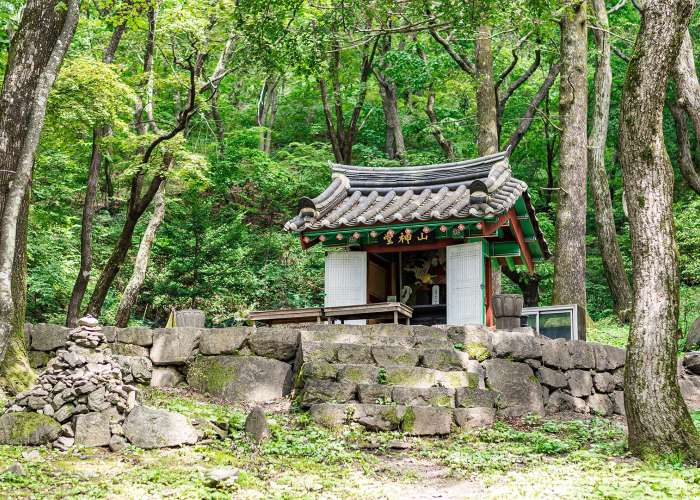
Located about 30m east of the Daegwallyeong Seonghwangdang, this shrine is designated as Gangwon-do Monument No. 54. Inside the small tiled building, a portrait of the Guksa Seonghwang is enshrined. The image depicts the deity on a white horse carrying a bow and arrows, accompanied by an attendant holding the reins and guarded by tigers. The inscription reads "Great Spirit Guksa Seonghwang of Daegwallyeong."
Tourist Guide
In front of the shrine stands a stone statue called Subidang or Sugudang, dedicated to the "Subi," subordinate spirits who serve as messengers. While the current structure was rebuilt in 1944, its history is deeply linked to the Gangneung Danoje Festival, which dates back over a thousand years. Historical records suggest the mountain spirit enshrined here is Kim Yu-sin, the famous Silla general, a belief widely held by local residents today.
Tourist Tips
The spirits of Daegwallyeong are central to the Danoje Festival. During the festival, the spirits are moved to the Namdaecheon Danoje grounds. After the final "Soje" ritual (burning of sacred items), the Guksa Seonghwang spirit returns here to Daegwallyeong, while the female deity returns to her respective shrine.
#단오제장#대령산신#대관령산신#강릉단오제#기념물#성황당#사당
-
-
Downtown
Gwaneum-ri Five-story Stone Pagoda
A stone pagoda from a temple called Anguksa during the Goryeo Dynasty.
Introduction
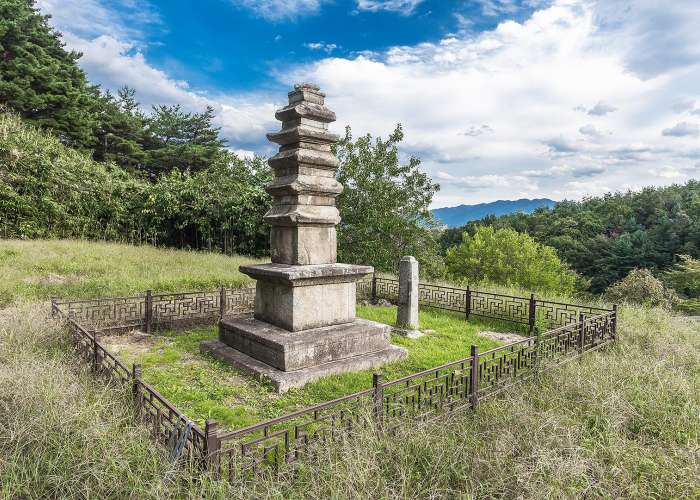
Located in Seongsan-myeon, Gangneung, this pagoda was designated as a Gangwon-do Cultural Heritage on June 10, 1992. It is a Goryeo Dynasty granite pagoda featuring a five-story square body on a double-tier base. Although some corners of the roof stones (okgae) are damaged, the original form is relatively well-preserved. The foundation stone (jidaeseok) is made of several long stones, and the lower base is carved from a single stone. Each side of the lower middle stone features three "ansang" (elephant-eye shaped) carvings. The upper base supports the first-story body with two-tier supports.
Tourist Guide
Visitors to Gwaneum-ri can find this 3.3-meter-tall pagoda at an old temple site. As the original name of the temple is not confirmed, it is named after the village. However, based on records mentioning "Anguksa," the area is presumed to be the site of Anguksa Temple. Remaining embankments, foundation stones, and long stones clearly indicate that this was once a temple site. It offers a chance to travel back in time with a pagoda that has stood in the same spot for centuries.
Tourist Tips
Reaching the pagoda is not easy. Due to the unmanaged surroundings and unclear location, it is especially difficult to find in summer when the grass is thick. It is located behind a small temple building that looks like a private house. Since it sits in the middle of a forest, it is best to ask local residents for directions as they know the exact location.
#세월#안국사지#고려#오층석탑#석탑#절터
-
-
Gyeongpo Area
Maewoldang Kim Si-seup Memorial Hall
The author of Korea’s first classical Chinese novel, Geumo Sinhwa
Introduction
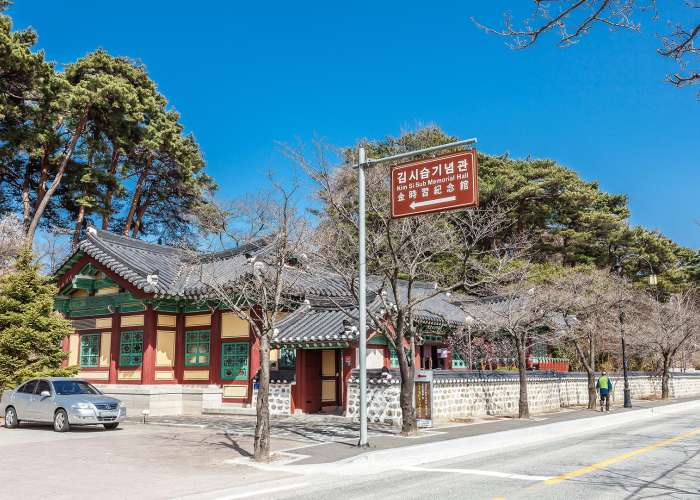
Maewoldang Kim Si-seup Memorial Hall is dedicated to preserving the spirit of Kim Si-seup, the author of Korea’s first classical Chinese novel Geumo Sinhwa and one of the six loyal retainers (Saengyuksin). The hall celebrates his elevated spirit expressed through poetry and novels.
Tourist Guide
Kim Si-seup is known for writing Geumo Sinhwa, Korea’s first classical Chinese novel, which consists of five works blending imaginative fantasy with social criticism. He was also one of the loyal retainers who opposed King Danjong’s dethronement. To honor his literary and philosophical contributions, the memorial hall opened on June 15, 2007. The site covers 3,117㎡ with a building area of 358㎡, consisting of a single exhibition hall. The exhibition spaces include one display room, one traditional “Jeopo” play experience room, one animation room, and one photo zone room.
Tourist Tips
Gangneung is Kim Si-seup’s ancestral hometown and the place where his mother lived at her late husband’s grave. During his wandering years, it served as a base for his travels. Kim was a poet and writer with a free, unconventional style, a philosopher blending Buddhist and Confucian ideals, a practitioner of physical and spiritual cultivation, a humanitarian sympathetic to common people, and a traveler who admired the natural beauty and traditional aesthetics of Korea. Despite conflicts with his era, his integrity and steadfastness earned lasting respect. Visitors can view video materials of his representative classical poems, watch the Geumo Sinhwa animation, and learn the traditional folk game “Jeopo” featured in Manboksa Jeopo-gi, one of his works.
#한문#소설#매월당#김시습#한문소설#문학#한시
-
-
Downtown
Daechang-ri Dangganjiju (Flagpole Supports)
Unified Silla flagpole supports made of granite with a simple design featuring beveled edges.
Introduction
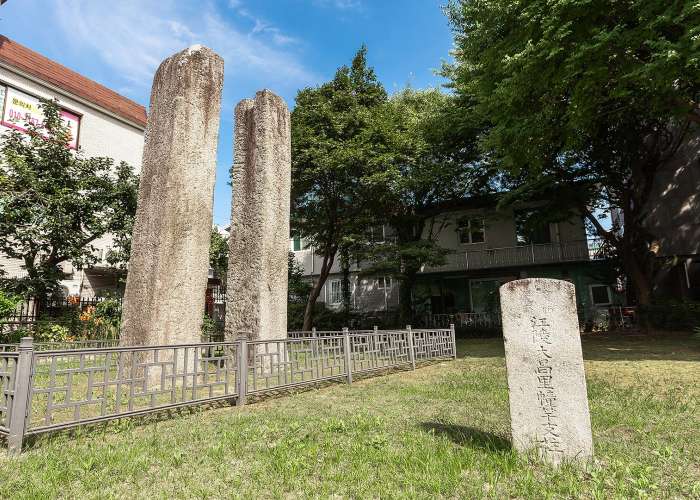
Designated as a National Heritage on January 21, 1963. Standing 5.1m tall and made of granite, the two pillars face each other north to south with a 1m gap in their original positions. While roof tile fragments found nearby suggest this was a temple site, no historical records remain. The pillars are simple with no carvings on the inner or outer faces, except for slightly beveled edges on the outside.
Tourist Guide
Since the original base stones are missing, the exact structure is unknown, but the rectangular foundation stones suggest the base was also rectangular. Its simple style and sturdy execution are very similar to the flagpole supports at Mangdeoksaji (Treasure No. 69), leading experts to estimate its construction around the 8th century.
Tourist Tips
Located in the heart of the city, the two pillars stand facing each other. It may be difficult to imagine the original appearance as the base that supported the flagpole is gone. However, its simple and unadorned form reflects the aesthetic of its time. Its central location makes it an easy stop during a city tour.
#깃대#당간지주#8세기경#망덕사지#당간#모[角]#보물